


Beyond the Hype: What Counselors Really Want from AI
What 600+ counselors revealed about AI, burnout, and the next decade of counseling. Discover how counselors are approaching AI with discernment, navigating burnout, protecting clinical judgment, and reshaping their practices for 2030.

 Table Of contents
Report overview
Counseling is entering a pivotal era.
We surveyed more than 600 counselors about their realities, concerns, and vision for the profession. This report covers what’s driving burnout, how counselors think about AI, and what must stay non-negotiable in therapeutic care.

“Technology should take care of the tasks that slow us down, but it should never make the decisions that define care. We lead, we connect, we decide, AI just helps us do it better.”
— Dr. Cleopatra Lightfoot Booker, Psy.D.
AI is here, but counselors are discerning
43% of counselors use AI today, mostly for scheduling and documentation. 59% expect to adopt it within five years, but only 6% use it in any client-facing role, and most want to keep it that way.

“AI will be integrated in many facets of work, from session reminders to in-session suggestions, completing documentation, helping therapists becoming more well-rounded.”
— Alan Olson, MA, LMFT

Burnout is the baseline
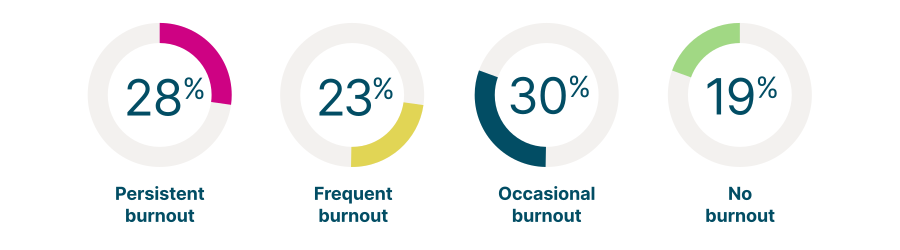
81% of counselors experience burnout, and half feel emotionally exhausted weekly. Low pay, low reimbursement, and administrative complexity – especially in hybrid and mixed-payer environments- are structural issues counselors don’t expect to ease soon.

Burnout is extensive:
More than a quarter of counselors suffer from extreme fatigue
“[I don’t] have enough time to do everything I would like to get done.”
— Yelena Gidenko, PhD, LCMHCS, BCTMH
Where counselors want AI’s help
Counselors want tools that make their workday manageable. Top priorities: Reducing administrative burden (63%) Documentation support (63%) Treatment planning (45%) Billing (41%) Diagnostic support (27%). Fewer than 1 in 4 expect AI to fix systemic problems.

“I’m juggling [the demands of] providing therapy to clients, administrative tasks as well as raising a family.”
— Jennifer Laubenstein, MSEd, LPC, CSAC
Trust is a key factor
82% worry about client data privacy 76% fear loss of human connection 75% flag algorithmic bias. Counselors are clear: AI must support human judgment, protect client data, and stay within defined guardrails.

“The connection I make with my clients – I believe the relationship is the greatest change agent, and AI will never take that away.”
– Heather Bjur, MA, LMFT

Explore the full data
Read the complete report to understand the challenges and opportunities shaping the future of counseling.