


 February 3, 2026
 5 min read
by Nadésia Douté, Author
Why your therapy practice should break up with Venmo (and Square)

 Table Of contents
As a therapy practice owner, you’re always looking for ways to make life easier for you, your staff, and your clients. When it comes to collecting payments, it’s tempting to use what seems simplest, like Venmo, PayPal, Zelle, or even Square. You might use them in your personal life, so why not for your practice?
While these apps are great for splitting a dinner bill, they introduce serious risks for a therapy practice. They simply were not built to handle the unique needs of healthcare – especially when it comes to privacy, compliance, and seamless integration with your clinical systems.
Let’s walk through why these popular payment apps are a bumpy road for your business and what a smoother path looks like.
Understanding the difference: What are P2P apps and Square?
- Peer‑to‑peer (P2P) payment apps: These apps – like Venmo, PayPal, Cash App, and Zelle – are built for personal money transfers between individuals, not for healthcare settings.
- Square: Square is a retail point-of-sale (POS) platform, not a P2P app. It’s designed for stores and restaurants.
The hidden dangers of using consumer apps for client payments
Using a consumer-grade payment app or a retail-focused tool like Square can seem like a harmless shortcut. But beneath the surface, you are opening your practice to significant compliance, financial, and ethical risks.
HIPAA compliance headaches
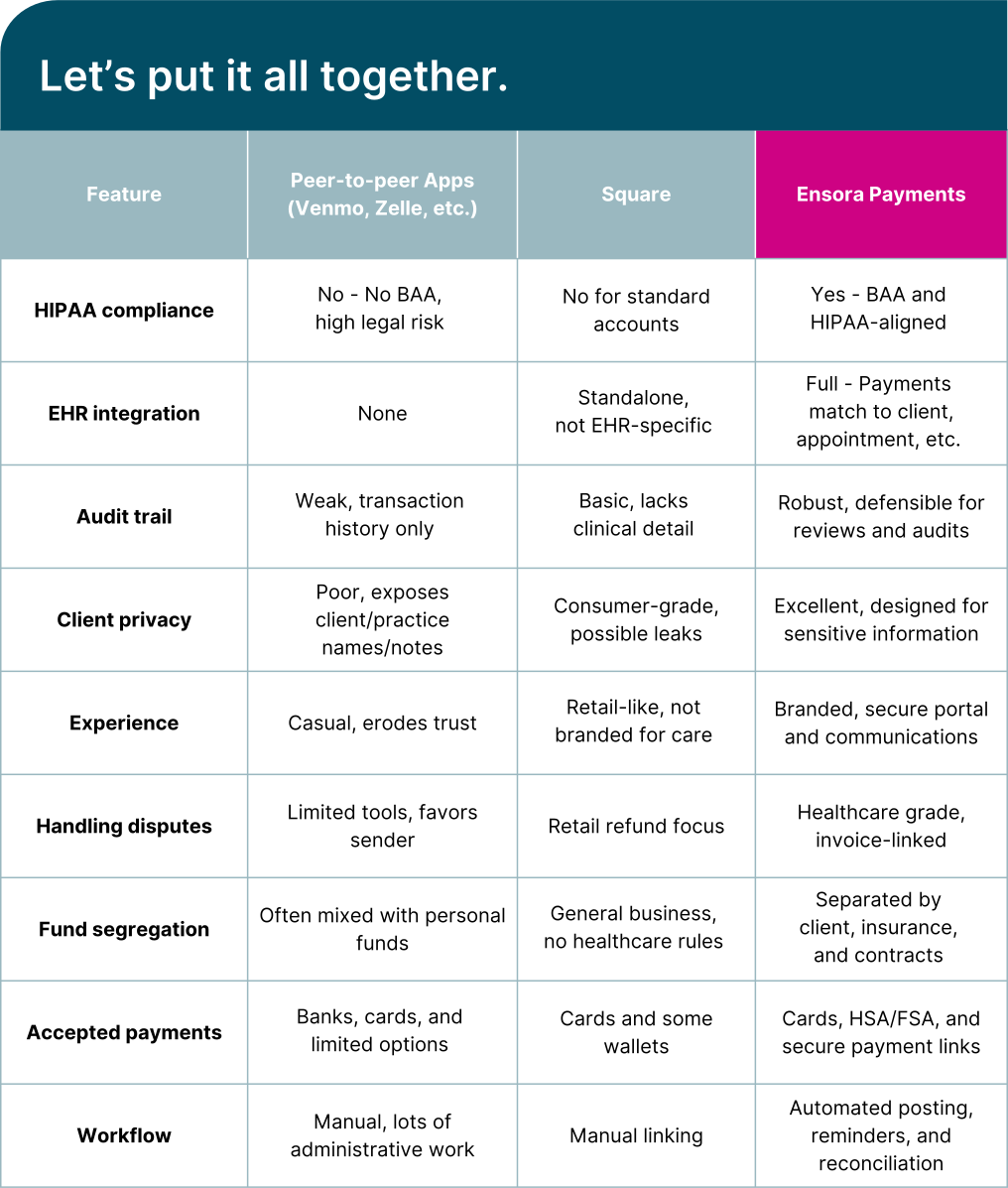
This is the big one. Peer-to-peer payment apps are not HIPAA-compliant. They will not sign a Business Associate Agreement (BAA), which is required for any business associate handling Protected Health Information (PHI). If payment information ever ties back to treatment details, you risk a HIPAA violation.
A simple transaction can reveal more than you think:
- Client names
- Your practice’s name
- Payment notes describing services (“Session for anxiety” or “Therapy co-pay”)
You might remind clients not to share sensitive information, but you can’t control what they write. One hasty note could put you at risk for a reportable data breach.
While Square does offer a HIPAA BAA for eligible services, it still operates outside healthcare workflows (no native EHR/encounter linkages), so keeping payments compliant and audit ready requires a lot of manual work.
Messy records and missing audit trails
Running a healthcare practice means keeping clean, defensible records. Audit trails are essential for insurance reviews, financial audits, or client disputes.
P2P apps are not built to integrate with your Electronic Health Record (EHR) or practice management system (PMS). Every payment must be tracked manually. Square, on the other hand, may offer some business reports, but they aren’t tailored to healthcare. You will not find encounter-level reporting, insurance reconciliation, or an automatic link to client responsibilities.
That means:
- More manual reconciliation and room for error
- A harder time matching payments to specific services or clients
- Frustrating audits and extra administrative work for your team
Square’s analytics are general and miss key details healthcare practices need, like CPT/HCPCS code mapping, insurance payments, or client encounters.
Disconnected from healthcare workflows
You want payments tied directly to clinical care – linked to appointments, encounters, and invoices.
P2P apps and Square cannot do this natively. Because Square is a standalone system, payments are not automatically matched to client records or services. This increases billing disputes and accounting headaches, taking valuable time away from client care.
The risk of mixing business and personal funds
Many clinicians using P2P apps connect them to their personal bank accounts. This blurs the lines between business and personal money and is a red flag for the IRS or licensing boards. Square, while a business account, still does not enforce healthcare-specific fund segregation, making compliance with reimbursement rules harder.
Undermining client trust and professionalism
Trust is the heart of therapy. Using a casual, social payment app or even a generic retail checkout system can feel unprofessional and diminish the sense of safety clients expect. Square’s user experience is designed for stores and restaurants, not for the privacy needs of therapy clients. Your practice deserves a system that feels secure and branded, reassuring clients at every touchpoint.
Limitations in handling disputes and chargebacks
Handling payment disputes in healthcare can be complicated due to insurance changes, appointment cancellations, or clinical documentation needs. Peer-to-peer apps make it hard to prove what service was provided. Square’s dispute system is designed for retail refunds, not complex healthcare scenarios. It lacks the documentation and support structure you need for clinical billing.
A better approach: Credit card processing made for private practice
You shouldn’t have to pick between convenience and compliance. Healthcare-specific payment solutions like Ensora Payments are built to bridge that gap, integrating directly into Ensora Health’s EHR platforms – TheraNest and Fusion – so payments flow natively through your existing clinical, scheduling, and billing workflows.
Ensora Payments handles payments as a core part of your therapy practice, not an afterthought. It’s HIPAA-compliant, links payments directly to clients and invoices, automates records, and supports credit cards, debit cards, HSA/FSA, secure links, and more. The result? You save time, reduce mistakes, and give clients the professionalism and privacy they deserve.
Ensora payments vs. Peer-to-peer apps vs. Square: A side-by-side comparison
Choose the solution made for you
Your payment system reflects your commitment to privacy, professionalism, and client trust. While peer-to-peer apps and Square look simple, they introduce hidden risks and burdens for your therapy business.
Ensora Payments is built for practices just like yours, making payments seamless for you and confidential for your clients. Plus, you get intuitive features like instant payout and batch processing that make daily billing faster and easier.
Speak with one of our experts to see how Ensora Payments can simplify your billing and protect your practice.
Additional resources


Experience the Ensora Health difference.
See how we can transform your practice.
